
Tag: politics

  • How to Stay Informed Without Emotionally Decomposing

    How to Stay Informed Without Emotionally Decomposing

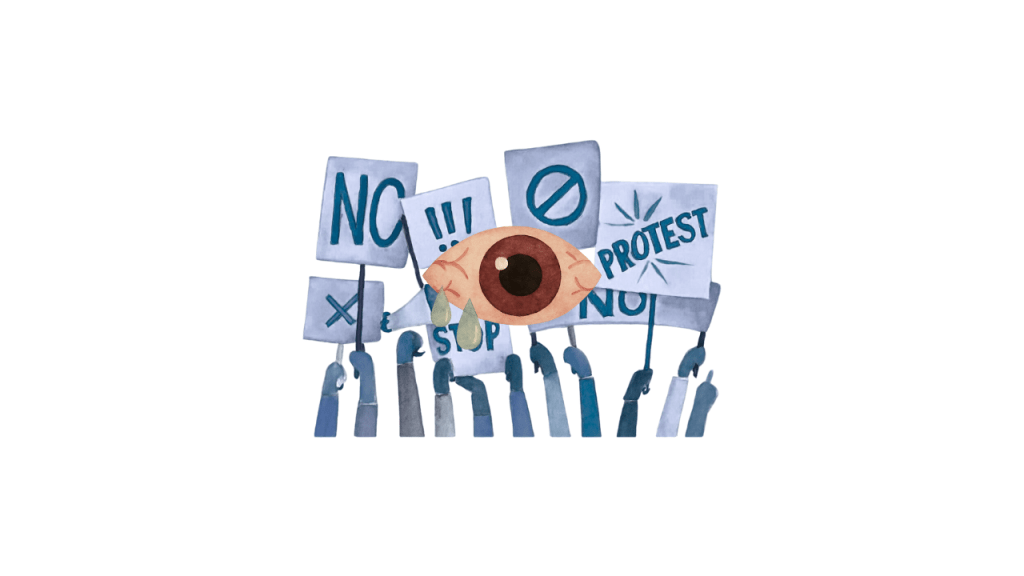
    There is a particular kind of fatigue that comes from trying to remain a responsible, well-informed person in 2025. You pick up your phone in the morning with innocent intentions—just a quick check of headlines—and seconds later you’re staring into a digital mural of collapsing institutions, international disasters, economic mayhem, political drama, and the occasional algorithmically mysterious TikTok dance tutorial. Before coffee even enters the bloodstream, the day already feels like a mountain you did not agree to climb. The human brain evolved to track village gossip and occasional cattle theft, not 12 geopolitical flashpoints before breakfast.

    Modern news is produced with velocity in mind. Instead of the slow, measured rhythm of a morning paper, we now receive a constant intravenous drip of updates, alerts, and anxious editorial rhetoric. Stories arrive stripped of context, competing not for understanding but for immediate reaction. The system rewards speed, emotional charge, and instant certainty. Anyone who feels overwhelmed in the face of that environment is having a normal, proportionate reaction to a culture that fires information like artillery.

    Responsible engagement no longer means consuming everything the moment it emerges. It means setting boundaries with the pace of the news cycle, the same way someone might set boundaries with a friend who calls at all hours without checking if you’re awake. Designated windows of attention create space for another mode of living—reading for pleasure, noticing the weather, staring out a window, or simply existing without the sense that the fate of the world hinges on constant vigilance. Few citizens function well when their nervous systems run in emergency mode from dawn to midnight.

    Depth offers another form of protection. Endless scrolling supplies a sensation of awareness while delivering very little comprehension. Longer reporting—articles, podcasts, in-depth interviews—often creates a calmer psychological atmosphere, precisely because it unpacks the complexity that headlines reduce to blunt impact. Understanding a single issue thoroughly can be more grounding than scanning a hundred brief updates that leave no time for interpretation.

    Curiosity also matters. When something upsetting appears on a screen, take a moment to notice what your mind and body are doing before you decide what the story means. Anger, fear, and sorrow are reasonable responses to many events in the world, but allowing a moment of internal observation can open a window between reaction and judgment. That small pause often reveals the questions hiding beneath the feelings: what precisely is being reported, how much is confirmed, what context is missing, and what kind of response might be possible. Curiosity keeps the imagination moving instead of collapsing under the weight of assumption.

    The way we talk to one another shapes our political climate as well. Online culture encourages debate as spectacle, performed for invisible audiences rather than the person actually participating in the exchange. Real dialogue requires something more generous: the willingness to assume that the other person is attempting to communicate in good faith, to ask genuine clarifying questions before responding, and to acknowledge one’s emotional state rather than disguising it behind performance. A conversation that concludes with mutual clarity, even amid disagreement, is far more civic than a flawless takedown delivered for retweets.

    A sense of agency can keep despair from hardening into resignation. Small steps: supporting an organization, volunteering, writing a letter, helping someone close to home—shape a narrative of participation rather than helplessness. Change often begins at a scale that looks inconsequential from the outside. On the inside, these choices affirm that history isn’t something happening to you while you watch from the sidelines.

    In the end, staying informed without emotionally collapsing involves a set of habits rather than heroic resolve: giving yourself breaks, choosing richer sources of information, letting curiosity guide interpretation, speaking to others with humility instead of competition, and taking action where possible. Some days will still go poorly; occasionally the world will feel like a weight pressing down, and there will be nothing to do but close the laptop and walk away. But even that—protecting one’s own ability to remain human—is a form of participation in its own right.

  • Postcolonial Hierarchies and the Narratives Women of Color Inherit

    Postcolonial Hierarchies and the Narratives Women of Color Inherit

    Introduction

    Every culture tells its daughters who to become, but some inherit mirrors already cracked.

    For women of color, those mirrors were often made elsewhere—crafted from someone else’s image of beauty, civility, desirability, and power. Colonialism didn’t just redraw maps; it redrew faces. It arranged the spectrum of color and culture into a ladder, and many of us still climb it without realizing who built it.

    Even now, when representation flourishes on screens, there’s a quiet script underneath: who gets to be “universal,” who gets to be “niche,” who gets to be desired but not complex.

    These hierarchies don’t shout; they whisper through casting calls, brand campaigns, algorithms, and dating apps.

    They tell certain women of color they are “too much,” and others that they are “not enough.”

    Postcolonial theory often focuses on politics and land, but its most intimate frontier is the body.

    Colorism, hair politics, accent shame—all of these are residues of an older order where proximity to whiteness meant safety.

    Even today, self-love campaigns coexist with whitening creams. The language has changed—“brightening,” “toning,” “refining”—but the longing remains: to be palatable, to be legible, to be loved without complication.

    These standards don’t just operate externally; they become internal governance. We curate ourselves before we’re even aware of performing. We learn to modulate tone, gesture, and even joy, careful not to appear too loud, too assertive, too foreign.

    It’s not vanity—it’s survival.

    Gentlewoman of Empire

    Certain narratives reward compliance. The “model minority” myth, for instance, dresses submission as success. It promises belonging through perfection, invisibility through achievement.

    But beneath that polished surface is exhaustion: the emotional labor of disproving stereotypes while trapped inside them.

    Women of color are often told to be grateful for progress while still navigating institutions that mistake endurance for equality. Even empowerment becomes scripted—neat, marketable, inspirational.

    Yet real liberation rarely photographs well. It’s messy, angry, self-doubting. It doesn’t fit the colonial frame.

    Storytelling as Resistance

    Narrative is how domination sustains itself—and how it breaks.

    When women of color write, speak, film, or organize, they aren’t just producing art or activism; they’re revising the archive. They’re saying, “I exist outside your taxonomy.”

    The internet has made visibility easier but also more treacherous. Algorithms flatten difference, pushing certain faces forward while erasing nuance. Aesthetics of diversity replace actual structural change.

    Still, the act of telling one’s story remains insurgent. To name your experience is to reject the silence colonialism taught.

    The most radical work may happen not on stages or feeds but in friendships, in sisterhoods, in private spaces where women of color learn to see each other fully.

    These spaces allow for contradiction—to be strong and uncertain, beautiful and unbeautiful, seen and unseen.

    Postcolonial hierarchies thrive on comparison; intimacy dissolves it.

    When two women of color affirm each other’s complexity, they perform a kind of quiet decolonization: they return language, softness, and agency to where it was once denied.

    Closing Reflection

    Colonialism taught us to look at ourselves through the eyes of empire. The project of this century is to look back—with our own eyes, and each other’s.

    The work isn’t just to critique representation, but to repair relation: to see beyond archetypes, beyond scarcity, beyond the illusion that there’s only room for one.

    To unlearn the mirror’s bias is not to reject beauty—it’s to redefine it.

    And in that redefinition lies something more than resistance:
    a language of love built from the fragments of what was never supposed to survive.

  • Your Personality Might Be a Colony of Capitalism (And That’s Okay, We’re Working On It)

    Your Personality Might Be a Colony of Capitalism (And That’s Okay, We’re Working On It)

    When You Realize Your Identity Has a Subscription Fee

    Somewhere between the fourth and fifth hour of your doomscroll, there is the creeping suspicion that you’ve forgotten something important.

    It’s when you realize that your personality isn’t entirely yours. It has been shaped, sanded down, and polished by years of advertising and the quiet pressure to be someone with a five-year plan and a consistent aesthetic.

    In the 21st century, empires no longer arrive with anchors and armed ships. They arrive with subscription renewals and branded self-improvement language.

    Capitalism has become the kind of roommate that is always present, rarely helpful, and constantly leaving its fingerprints on your decisions. It insists you turn hobbies into side hustles and forces you to feel guilty when you sit still. Even resting can start to feel like slacking, and simply existing becomes another item on the to-do list you never quite finish. Somewhere along the line, childhood curiosity was replaced with “personal branding,” and the desire to be interesting turned into the pressure to be marketable.

    It’s not that we consciously agreed to this arrangement. It’s that from an early age, we learned that to be taken seriously we had to sell ourselves—on college applications, in interviews, through perfectly crafted statements of “passion,” “drive,” and “thriving in fast-paced environments.” For many people, staying afloat meant performing competence even when everything felt unstable. Capitalism colonized not just the workplace, but the psyche. The colony lives not in land, but in how we think about ourselves.

    The irony is that Gen Z is painfully aware of this. We can critique capitalism while still shopping under its fluorescent lighting. We can repost anti-corporate memes while scrolling on devices powered by global supply chains. The self-awareness doesn’t exempt us; it just means we can see the machine even while we’re moving through it. We are perhaps the first generation that can describe our condition in detail while still being fully immersed in it.

    Decolonization Is Not Aesthetic

    Decolonizing the self rarely looks like dramatic overnight transformation. It looks like small, deeply unglamorous decisions: appreciating something without needing to post it, reading a book because it feels good rather than because it builds your résumé, refusing to speak about yourself only in deliverables and accomplishments. It looks like resting without guilt, or admitting that you are exhausted not because you are weak, but because the world is demanding more of you than a human body can realistically give.

    Machines are consistent and efficient. Humans are not. Humans get overwhelmed, dream too big, run out of energy at 3 p.m., fall in love at bad times, and occasionally cry in the shower before carrying on with their day. Capitalism would prefer we behave like automated systems, productive and predictable.

    The goal isn’t to abandon society and become a wool-spinning hermit in the woods (although if you do, please start a newsletter). It’s simply to live like you are more than a product: to see your identity as something unfolding, not something curated; to understand that your worth isn’t a KPI; to remember that you exist outside the marketplace’s expectations.

    Yes, capitalism has colonized the world, and in many ways it has colonized our personalities too. But refusing to become fully mechanical, refusing to let the grind hollow out your sense of self, is its own quiet rejection. We are all working on it. And for now, that’s all we can do.