Tag: life

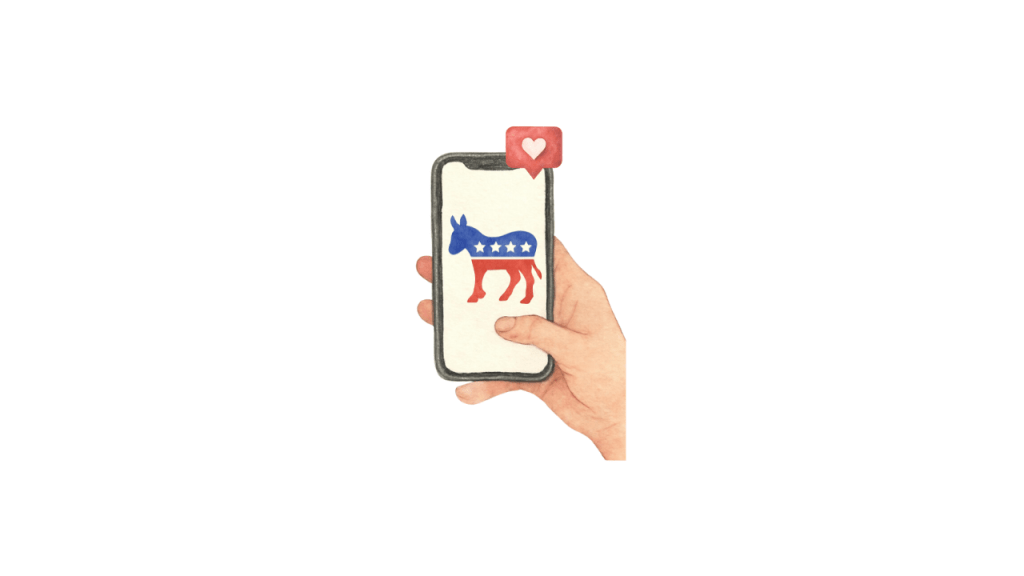
  • The Rise of Attractive Politicians and What That Means for Democracy (I’m Not Complaining)

    The Rise of Attractive Politicians and What That Means for Democracy (I’m Not Complaining)

    It is increasingly difficult to pretend we don’t notice it: politics is getting better looking. The modern political landscape is full of candidates who seem styled not only for public office but for a Vanity Fair editorial spread. You scroll through election coverage and instead of the familiar sea of gray hair and uncomfortably wide ties, you see something different: jawlines, well-tailored suits, teeth that look meaningfully whitened by a professional. Democracy is still democracy, but the casting has changed.

    There is also the more generous interpretation: attractive politicians are often a symptom rather than the cause of changing electoral expectations. The electorate has grown more diverse, younger, more media-literate, and far more sensitive to presentation. Politics is now expected to communicate at the same pace as entertainment. If a mayoral candidate can’t appear relatable in an Instagram clip, can they cut through the noise of a thousand competing posts a day? If a congressional representative does not understand how they are visually interpreted, can they stay electorally relevant?

    This is not entirely new. The U.S. has flirted with the visual appeal of candidates for decades. John F. Kennedy practically built the blueprint. His campaign did not succeed only because he was handsome and telegenic, but it certainly didn’t hurt that facing Richard Nixon on the first televised presidential debate made the matter painfully obvious. The country’s first brush with mass visual politics proved something political scientists still measure: attractiveness influences how voters assess competence and public perception of trustworthiness—even when people swear they are “only voting on the issues.”

    Fast-forward to today, and the political aesthetic stakes have only escalated. The existence of 24-hour news cycles, social media feeds, clip culture, and political thirst TikToks have turned public service into something that occasionally resembles public relations modeling. Candidates are constantly being screenshotted, memed, reposted, and observed in high-resolution. In a political environment where no one reads a five-page policy memo but everyone watches a seven-second clip, visual presence becomes a form of political literacy.

    Enter the new wave of aesthetically blessed officeholders.

    There’s the now-legendary rise of New York’s mayor-elect Zohran Mamdani, whose name was sliced into a TikTok song for its political implications and circulated for its catchiness. California’s Gavin Newsom has long understood the emotional leverage of presidential hair. Texas State Rep. James Talarico manages to look like the protagonist of a political drama while delivering sermons on healthcare and education policy on the House floor. And, of course, JFK’s only grandson— Jack Schlossberg—has become the internet’s favorite example of political attractiveness.

    Whether any of these officials intended it or not, the public reaction around them reflects something serious: the idea that democracy is meant to be performed and seen. Voters now consume politics the way they consume most modern information—as images and soundbites. Visual charisma becomes a shorthand for credibility. This is not necessarily a moral judgment; it is a psychological one. Humans have always responded to confident, symmetrical faces, and now we do so with high-speed Wi-Fi.

    Some critics argue that this shift represents a dangerous shallowness, a slide into politics-as-pageant. If people are voting with their eyes rather than their analysis, do we risk confusing editorial polish with actual leadership? Possibly. But we should also be honest: attractiveness rarely operates alone. Attractive candidates who are incompetent usually flame out quickly. The ones who last—JFK being the prime historical example—combine presentability with political fluency. The looks may open the door, but they don’t keep someone in the room.

    Perhaps the greatest irony is that we often pretend this isn’t happening, as though discussing looks in politics is embarrassing and unserious. But it has always mattered. It mattered in 1960. It mattered in the Roman Republic, when physical presence was part of rhetorical power. It mattered in monarchies, where height, clearness of voice, and physical strength influenced legitimacy. We are simply witnessing a reemergence of something ancient, projected now through comment sections and high-resolution front-facing lenses.

    Into this media-slick environment arrives a very real generational tension. Gen Z is watching a political class that is, in many cases, twice the age of their parents—people who legislate their futures without having to live through them. Young voters aren’t simply drawn to good-looking candidates; they’re craving representatives who actually belong to the century they govern. When someone under 45 runs, it feels like a long-delayed handoff of the baton. The attraction is partly aesthetic, yes, but also existential: younger politicians represent the promise that governance might one day reflect the world the governed actually inhabit.

    So perhaps this era of unusually attractive politicians isn’t a step downward but an evolution—an adaptation to a world where voters demand clarity, coherence, and yes, someone who looks capable of leading in 4K resolution. If democracy must survive televised congressional hearings, endless push notifications, and thirty-second clips sliced apart for social media dissection, then maybe the least we can ask is that the people steering the ship understand the camera angle.

    And if we end up with better lighting in the process—well, that’s just good citizenship.
  • Saying ‘I Don’t Know’ Is the Most Radical Political Position I’ve Held

    Saying ‘I Don’t Know’ Is the Most Radical Political Position I’ve Held

    Public debate today resembles a race in which everyone is supposed to finish first. Opinions are expected immediately, fully formed, and ready for distribution across every platform the moment a headline appears. The pace of the news cycle encourages performance long before learning can even begin. In a single afternoon, people encounter policy announcements, diplomatic crises, scientific reports, economic projections, and commentary from every possible angle. The expectation is that citizens must instantly understand all of it.

    This atmosphere rewards certainty. The quickest voice often feels like the most credible one, even when depth is absent. Hesitation looks suspicious. Questions can come across as disloyal. A pause to think feels like falling behind. The pressure creates a political culture in which many speak quickly simply to avoid being seen as unprepared. It becomes easier to participate in a debate than to study the subject of it.

    Saying “I don’t know” interrupts this cycle. The phrase creates room for thought in a space that rarely grants any. It turns down the temperature. It allows a moment of air in a system that has been running on fumes.

    Political polarization depends on the belief that every issue contains only two possible answers. Admitting uncertainty challenges the idea that humans must pledge allegiance to entire ideological packages. When someone says they need more time to understand, they signal that a conversation is possible rather than another performance of side-versus-side. Tension softens. The dynamic shifts away from defending a team and toward examining the idea itself.

    This matters because the volume of information expected of individuals is impossible to carry. Entire regions, wars, border histories, and legislative battles arrive through notifications while students are walking to class, employees are on break, or parents are trying to make dinner. Even experts dedicate careers to single topics and still run into areas they are continuing to explore. The idea that average people must produce faultless commentary on everything discourages engagement rather than strengthening it.

    A culture that cannot tolerate uncertainty becomes vulnerable to loud voices that promise simple explanations. Confidence begins to outweigh substance. Complexity is replaced with slogans. People cling to whoever sounds sure, even when that certainty rests on shaky ground. In this environment, humility becomes a form of intellectual self-defense.

    Admitting “I don’t know” also transforms interpersonal relationships around politics. When one person is willing to slow down, others often follow. The discussion becomes less adversarial. People stop speaking like lawyers preparing closing arguments and begin sounding like citizens attempting to understand their own world. The tone shifts away from accusation and toward curiosity.

    Curiosity is a skill that deserves more honor than it receives. It widens the conversation. It invites follow-up questions that are actually useful:
    What sources explain this well?
    What context am I missing?
    Which historians or analysts have studied this closely?
    How did this situation develop over time?

    A person who asks questions is still in motion. They have not withdrawn from civic engagement; they have deepened it. A political landscape that respects this process becomes capable of growth rather than calcification. It encourages people to refine their understanding rather than defend their first impression forever.

    There is also emotional relief in honesty. Pretending to understand everything is exhausting. Many people feel this strain silently while scrolling through constant developments: the sinking feeling of being expected to keep up with a world that expands faster than their capacity to learn. Acknowledging that learning takes time offers permission to breathe. It also creates space for others to admit the same.

    Consider how different public life might look if thoughtful hesitation were allowed. People could change their minds without shame. Opinions could evolve. Discussions could become shared investigations instead of duels. Pride would not stand in the way of new information. Democratic participation could operate the way education is supposed to work: through reading, questioning, listening, and gradual understanding.

    “I don’t know” becomes a promise to remain engaged. It signals commitment rather than surrender. It means the person intends to research, to learn, to read something beyond a headline. It treats political understanding as a long, ongoing project rather than a competition to shout the fastest answer.

    At a time when polarization asks everyone to choose a side before they choose a source, humility becomes a radical civic gesture. It leaves space for dialogue in a culture running low on it. It reminds people that citizenship is not measured in instantaneous expertise but in steady participation over time.

    In a world increasingly shaped by confident voices, the simple act of slowing down and admitting imperfection may be one of the rarest—and most transformative—political actions available.

  • I’m Not an Influencer, I Just Have a Healthy Sense of Main Character Syndrome (and I Promise It’s Whimsical, Not Self-Absorbed)

    I’m Not an Influencer, I Just Have a Healthy Sense of Main Character Syndrome (and I Promise It’s Whimsical, Not Self-Absorbed)

    Main Character Syndrome is, for the most part, a harmless indulgence. It is the daydream of being a protagonist without having to commit to an upload schedule. I get to imagine that the barista calling my name is a pivotal scene in my coming-of-age story, rather than a routine moment where someone hands me overpriced caffeine. I can pretend that the walk to class is a montage, that the soundtrack is something orchestral but modern, and that the stranger who smiled at me is either a love interest, a passing cameo, or if I’m in a particularly dramatic mood, the antagonist establishing his presence. It is romantic, ridiculous, and more affordable than therapy.

    But every now and then, reality intrudes. Nothing disrupts the illusion of cinematic elegance quite like deadlines, schedules, bills, and notifications arriving with the frequency of someone shaking me by the shoulders. Trying to maintain the aura of a headstrong heroine while replying to discussion posts at 11:57 PM is humbling in a way that defies language. There is no soft lighting, no sweeping crane shot, just the gentle glow of a laptop reminding me that even protagonists must submit their assignments before midnight. Character growth, unfortunately, still requires Google Docs.

    And yet, the charm of it remains. Because the point of Main Character Syndrome—the version that doesn’t result in delusions of grandeur or a carefully curated Notes App apology—is not believing you are better than everyone else. It’s believing that ordinary life deserves a little enchantment. A sense of play. Something to lift the weight of relentless productivity culture, where every hobby must become a hustle and every moment must be optimized. Whimsy becomes a form of rebellion.

    There is something wonderfully grounding about scheduling an impromptu solo coffee date—not because it will look cute on Instagram, but because the ritual of sitting at a small table with a warm drink makes the world feel gentler. It turns a break into a scene worth remembering. It reminds you that you’re allowed to enjoy yourself without earning it first. And, should someone glance across the café and mistake you for a writer at work on a novel—well, that’s just an artistic bonus.

    Crafting and upcycling carry the same glow. Turning a thrift-store ceramic frog into a glittering desk companion or giving a tired old skirt a new hem does not need to generate engagement, attention, or a sponsorship with a lifestyle brand. It can simply be fun—for the sake of fun. Making things with your hands has a way of making life feel real in a world that often insists everything exists only when it’s uploaded. And there is a childlike wonder in taking something ordinary and coaxing it into something special. It proves that transformation does not always need to be metaphorical; sometimes it just involves Mod Podge and an unreasonable amount of enthusiasm.

    Maybe the reason this sort of whimsy feels refreshing is because we are so often discouraged from indulging in it. We are encouraged to be serious, efficient, polished. We are expected to act like professionals from the moment we wake up, when deep down most of us would rather live like the heroine in a Studio Ghibli film—someone who pauses to make a serene breakfast, washes her hands by a sunny window, and believes that everyday errands deserve their own score. Life becomes kinder when we let small things feel significant. When we give ourselves permission to romanticize the mundane without needing an audience to validate it.

    And if that means I sometimes walk down the street pretending I’m in a scene transition complete with invisible violins, that’s not delusion—that’s personality.

    There is also something communal about the idea. Maybe most of us are quietly living this way, convinced that our daily responsibilities are part of a larger arc, that our midterms, rent payments, heartbreaks, and triumphs are leading somewhere meaningful. That even if the camera never pans dramatically, the story is still progressing. We are not competing for screen time; we’re simply sharing a very large cinematic universe.

    So no, I am not an influencer. I am just someone who refuses to see life as background noise. I am the girl who treats choosing a pair of socks as a costuming decision and folding laundry as a montage. I pursue joy without quotas, and hobbies without business plans. If this is delusion, it is at least creatively executed—and it makes the days feel richer, stranger, more alive.

    In a world determined to measure everything, whimsy remains gloriously unquantifiable. And I’m choosing to keep it.

  • I Want to Critique Imperialism But I Also Have Homework

    I Want to Critique Imperialism But I Also Have Homework

    There is a version of me that exists in an alternate timeline—one who spends her afternoons in an archive, elbow-deep in 19th-century newspapers, tracing the symbolic architecture of empire with scholarly serenity. In that version of the world, I have the time, energy, and generational wealth to devote myself entirely to the study of how the West stretched its borders, languages, religions, and beauty ideals across continents. But in this timeline—the unfortunate real one—I am drinking coffee at 11 p.m., typing a discussion post on Canvas about postcolonial theory while also memorizing vocabulary for a quiz due tomorrow. I want to dismantle empire. I also want eight hours of sleep. I am, unfortunately, a multitasking anti-imperialist with homework.

    The irony, of course, is that the forces I want to critique are the ones that set the conditions I live in. I can’t study imperialism all day because I am too busy navigating the systems built from its bones. Even academia—the place supposedly dedicated to critical inquiry—carries the fingerprints of empire everywhere. The “correct” way to write is the academic register, polished and standardized, its origins in European intellectual tradition. My best insights supposedly count for less if they don’t sound like they could be footnoted in an Oxford publication. The more casually I write, the less “serious” I am. The more human I sound, the less legitimate I seem. There is a silent expectation that the well-trained student must translate their original thinking into the linguistic preferences of a specific class—one with a passport, a library card, and centuries of institutional inheritance behind it.

    It’s strange to learn that even language has a border. And stranger still to realize that we cross those borders every time we turn in homework.

    Colonial hierarchies didn’t dissolve at the moment of independence ceremonies. They adapted. They moved from flags and gunboats to cultural standards that still govern daily life. Take beauty, for instance: the features most celebrated in mainstream media—thin noses, lighter skin, smooth hair—are not universal ideals. They are imperial echoes. For centuries, Europeans held themselves as the aesthetic default, and the world was taught, with steady pressure and measurable violence, to see itself through that lens. Today, the messaging persists in makeup ads, casting choices, photo editing apps, and TikTok filters that can instantly whiten teeth, thin faces, and heighten cheekbones. It exists in the offhand compliments about someone’s “refined profile,” the polite praise of a “clean” or “elegant” look. We inherited a global beauty hierarchy we did not consent to but continue to breathe like air.

    I notice it most on days when I am genuinely trying to focus on homework—when I am reading about colonialism in a textbook that never fully admits how violent it was. I am asked to absorb the facts while pushing down the emotional weight of them. The language is sanitized to make the reader comfortable, to make centuries of cultural erasure appear orderly, inevitable, even professional. The emotional truth—the grief, the loss, the survival—is squeezed out in favor of passive voice and tidy academic framing. “Territories were acquired.” “Borders were redrawn.” People disappear in the syntax.

    Meanwhile, I sit at my desk writing about this in APA format.

    There is something almost comedic about the situation: learning about empire through the very structures empire built; critiquing dominant power systems while conforming to them in order to earn the grade; writing passionately about decolonization while praying the professor won’t take points off for using contractions. It is a quiet tension that every young scholar from the Global Majority recognizes: the awareness that you are “allowed” to speak, as long as you speak in the master’s vocabulary.

    Even the time I have to think is rationed. Between readings, assignments, work, and the minor details of staying alive, I don’t have the luxury of sitting with the enormity of history for hours at a time. The emotional digestion of colonialism—of its reach, its endurance, its reappearance in everyday spaces like magazine covers, loan applications, and school rubrics—must happen in the in-between spaces: on the bus, in the shower, while heating leftovers.

    But maybe that’s the real proof that empire is still functioning. We don’t have to be studying colonialism to feel its shape. We just have to be living with it.

    One day—maybe in the future—I will have the time to devote to this fully. I will research without the ticking clock of deadlines. I will write in the voice that feels true, not the one that will earn the A. I will read the additional sources I bookmarked at 3 a.m. with the solemn promise of “later.” I will peel back the intellectual surface of empire, not just skim its headlines.

    For now, I am a student with laundry to fold, a reading response due at midnight, and a head full of historical contradictions. I don’t have a full critique of imperialism yet.

    But I’m working on it.

    Between classes.

  • Understanding Colonial Borders While Still Being Bad At Geography

    Understanding Colonial Borders While Still Being Bad At Geography

    There is a quiet comedy in being a twenty-first–century student of geopolitics who can give a detailed explanation of the Sykes-Picot Agreement but would still hesitate if someone asked you to identify Lebanon on a blank map. This contradiction isn’t hypocrisy—it’s a product of the way most of us were introduced to geography in the first place. We memorized capitals, traced coastlines, colored in countries with Crayola fervor, and then promptly forgot everything not required on the quiz. Nobody bothered to mention that the shape of a country is rarely accidental—that the angles, curves, and borders were often carved out with reasoning that has nothing to do with culture, language, or lived reality.

    Only later, usually much later, do we learn the uncomfortable truth: modern geography is not just geography. It is the fossil record of power. And once you see that, the map you once glossed over in middle school takes on a new, almost bruised clarity.

    The first time most people confront this fact, it produces a strange double sensation: recognition and disorientation. Recognition, because suddenly the world makes more sense—why conflicts cluster where they do, why regions remain tense decades after independence, why national identity in many countries is less about shared origin than shared reaction to an imposed boundary. Disorientation, because it forces you to confront how much of the global landscape was determined not by the people who lived on it, but by men in European conference rooms drawing straight lines with the self-assurance of gods.

    Those lines are still visible. The borders of many African and Middle Eastern states slice through communities, languages, and cultural regions without hesitation. They were drawn for the convenience of foreign empires, not the people who would later be expected to live with them. And yet, for those of us living outside those histories, they were taught as neutral facts—as though the outline of Iraq or Nigeria emerged naturally, like a coast formed by erosion rather than by diplomacy, conquest, and sometimes outright negligence.

    So yes, it is absolutely possible to know the politics without knowing the map by heart. Map illiteracy doesn’t mean you don’t grasp the stakes; it means the stakes reach beyond cartographic comprehension. Still, there is something humbling—almost grounding—about sitting with a map and trying earnestly to understand the shapes not as lines but as decisions. A border that looks clean and geometric from afar can represent decades of resistance. A tiny peninsula, barely noticeable in a textbook, might have been the site of a rebellion that changed the course of a nation. Even the smallest sliver of land can be the reason two governments glare at each other across negotiating tables.

    Learning that takes patience, but it also takes imagination. Maps flatten stories, and sometimes the work of reading them is the slow process of un-flattening—remembering that behind the perfect right angle are real cities, real families, and real consequences that spill into the present. Geography becomes less about memorizing where the mountains are and more about understanding who put the capital there and why.

    But perhaps the most honest part of this modern condition is that our confusion mirrors the original sin of these borders: the people who drew them were also bad at geography. Many had only approximate knowledge of the places they were dividing. They carved territories using incomplete information, ethnographic guesswork, and the boldness of colonial confidence. If our internal atlases feel underdeveloped, it’s because we inherited maps from people whose understanding was equally limited but backed by military power.

    This doesn’t excuse ignorance, but it does contextualize it. Being bad at geography doesn’t separate you from history—it binds you to it. You stand in the long shadow of decisions made on inaccurate maps with enormous consequences. The goal is not perfect recall of every border, but a willingness to look at the map with new eyes—to see it as something living rather than static, something contested rather than unquestioned.

    There is something reassuring in that realization. It means you don’t need to flawlessly label every nation to engage meaningfully with global politics. What matters is curiosity, a willingness to return to the map instead of assuming it is settled, a recognition that the world is still renegotiating lines drawn long ago.

    And maybe that’s the real story: not that we should feel embarrassed for not mastering every border, but that the borders themselves were never fully mastered—not by their creators, not by the governments who inherited them, not by the people now living inside them. They remain mutable, imperfect, and deeply human.

    Understanding that is, in its own way, a kind of geography.

  • In Defense of Actually Finishing Books

    In Defense of Actually Finishing Books

    Somewhere along the way, reading became something we perform more than something we complete. We collect books the way people once collected vinyl—evidence of taste, ambition, aesthetic sensibility. A curated stack on a bedside table can communicate entire versions of a personality in a single glance: the political theory you are about to read, the novel everyone claims changed their life, the slim philosophy paperback with a cover design that practically begs to be photographed. Meanwhile, many of those books rest permanently open to page 37.

    Finishing a book feels almost old-fashioned now, like waiting for the kettle to boil or writing a letter with actual ink. It requires attention that is not being siphoned off by app notifications, incoming emails, or the endless scroll of online discourse. In a culture that prioritizes momentum over reflection, sustaining focus long enough to travel from the first page of a book to its last has become an act of resistance against a thousand tiny distractions.

    What makes finishing a book quietly powerful isn’t achievement—though that part is satisfying in its own small way—but that completion allows the author to finish their argument. Books are not written in glittering fragments; they unfold in arcs. Even the messiest novel knows where it’s going. A dense political history may not fully reveal its thesis until the conclusion sharpens what came before it. The last chapter of a memoir can retroactively illuminate the chapters that felt disorienting or slow. Writers plan their journeys; finishing the book is the only way to understand the shape they were drawing.

    Modern reading habits rarely allow that shape to emerge. We skim articles, swipe through headlines, listen to interviews that distill 400 pages into eight minutes and a soft laugh before the ad break. Information now arrives pre-digested, trimmed down, optimized for quick consumption—almost like intellectual fast food. Books refuse to bend to that timeline. They demand a reader who is willing to stay in the room while themes evolve, while characters complicate, while ideas deepen beyond their introductory summaries. Commitment gives texture to thought.

    There’s also the emotional experience that only completion can deliver. Reaching the last page offers a private kind of satisfaction that few other habits provide. No applause, no progress bar, no metrics declaring your triumph—just the quiet recognition that you stayed with something long enough to absorb it in full. A finished book becomes an internal reference point, a part of the mental architecture you carry with you. Half-read books clutter shelves and consciences; completed ones leave a trace of transformation, however subtle.

    Finishing books also preserves something increasingly rare: the ability to follow a single thread of sustained thought. The world frequently encourages divided attention—multiple tabs open, three conversations at once, tasks interrupted mid-sentence. Books do not reward that kind of mental fragmentation. They reward return, presence, continuity. Reading all the way through teaches patience not through scolding, but through immersion. It trains the mind to resist the immediate and stay with the unfolding.

    There is a historical element here as well. People once read because books were among the few ways to encounter ideas larger than their immediate surroundings. Newspapers summarized events; books let you sit inside them. Lectures taught skills; books suggested questions you could spend years wrestling with. Even now, when the world is obtainable in ten-second clips, books remain one of the few mediums that ask for more of the reader than momentary attention. They request introspection. They ask the reader to imagine, empathize, connect, interpret, and sit with ambiguity without immediately resolving it.

    And finishing a book, strangely enough, can make reading pleasurable again. When you’re not racing toward the next recommendation or performing literary consumption for the digital audience, you have room to dwell in the slowness that makes reading worthwhile in the first place. You start noticing sentences the way one notices good weather—unexpected, quiet, fleeting. You realize that the magic of literature isn’t in proving you read it; it’s in letting yourself be changed by it at a pace no algorithm measures.

    Finishing books doesn’t make someone morally superior, and abandoning books midway isn’t a sign of failure. Life is busy, and some books become clearer when left unfinished. But choosing to complete a book once in a while affirms a kind of presence that the contemporary world hasn’t made easy to sustain. It proves that your attention is still capable of long-form investment, that your inner world can stretch to meet an author for the full distance of their thought.

    A finished book is not simply an object returned to the shelf. It is a conversation completed—a long one, sometimes knotty, sometimes miraculous—that leaves something behind. And in a world that fragments our focus daily, that kind of uninterrupted engagement is something worth fighting to keep intact.

  • I’m Not ‘Not Like Other Girls,’ I Am Exactly Like Other Girls and That’s Sociopolitical Solidarity

    I’m Not ‘Not Like Other Girls,’ I Am Exactly Like Other Girls and That’s Sociopolitical Solidarity

    For years, girlhood has been treated like a problem to solve. Everywhere you look, someone is being encouraged to brand herself as singular: not emotional like other girls, not dramatic like other girls, not into clothes or makeup or romance or whatever other trait currently signals triviality. It wasn’t personal—it was cultural conditioning, a quiet incentive to exist above the collective, to be exceptional enough to earn legitimacy in spaces that don’t respect women unless they’re outliers. But something is shifting. Suddenly it feels more radical, more interesting, more honest to be unexceptionally female—to say, with your whole chest, that you are just like other girls, and that is precisely the point.

    There is a quiet power in rooting for the group you are part of. It resists the subtle training most women received from childhood: that other girls are competition, that femininity is unserious, that solidarity is weak. Now, a new generation is rejecting that framing outright—digitally, socially, politically. Friendships are no longer something to outgrow once a boyfriend appears. Group chats have become war rooms of emotional intelligence and logistical coordination. Seeing a woman succeed doesn’t imply scarcity anymore—it’s evidence that the door was unlocked from the inside. If older narratives felt like high-stakes auditions for womanhood, this one is a communal living room with room on the couch.

    Part of this realignment comes from the recognition that the structures demanding individuality were never neutral. “Not like other girls” was rarely about personal expression; it was about distancing oneself from a demographic treated as unserious. To be “unique” was to survive the patriarchy’s job interview. To blend in was to risk being dismissed before getting a line of dialogue. And when that pressure dissipates—even a little—something expansive happens. The performance relaxes. The defenses lower. Women start noticing that they weren’t isolated from one another by personality, but by architecture.

    The internet accelerated this discovery. In earlier decades, women only had access to the girls in their immediate radius—those in the same school hallways, hometowns, or office cubicles. Now, the average 22-year-old can find thousands of girls who think the way she does in under a minute. TikTok has turned shared emotional experience into a form of data visualization: hundreds of thousands of people nodding along in the comments, saying, “I thought I was the only one.” It feels deeply political in a small way—like consciousness-raising meetings disguised as memes. And in a landscape where institutions are less trusted than ever, these self-made communities feel strangely more reliable than the systems meant to protect them.

    Of course, solidarity isn’t polite all the time. It can be chaotic, messy, unfiltered, and deeply inconvenient to the world that expected women to stay small and separate. But there’s also humor and tenderness in the chaos. A group of girls in a coffee shop can unravel geopolitical tension faster than most congressional subcommittees—if only because they have practice discussing problems that don’t have easy exits. They’ve been trained by life to diagnose power, notice harm, and find work-arounds in real time. Girlhood has always been a think tank, even if it was never labeled as such.

    And so embracing similarity—not uniqueness—becomes oddly freeing. It means you don’t have to invent yourself from scratch every morning. You don’t have to be original to have value. You can like the same lip gloss as everyone else and still have a subversive mind. You can post your iced latte, send the same memes, read the same books, and still be working out a political worldview behind the scenes. Conformity to aesthetics doesn’t stop complexity of thought. The fact that so many women share the same tastes is not evidence of homogeneity—it’s evidence of shared conditions.

    Declaring yourself “exactly like other girls” is not self-erasure. It’s a refusal to be pitted against your own demographic. It’s a reclaiming of what has always been true: femininity is not trivial, collectivism is not weakness, and identification with other women is a form of political alignment. It is not that the individual disappears—it’s that she is held up by a thousand others.

    If there is a thesis to this new era of womanhood, it might be this: the world benefits when girls talk to each other, stand by each other, and yes, even dress like each other. Similarity is not a failure of identity—it is proof that many people growing in the same environment learned similar survival strategies. That’s not embarrassing. That’s sociology.

    So no, we don’t need to be anomalous girls to matter. We can be deeply typical. Utterly recognizable. Matching, even.

    And in that exact sameness, we might find the kind of unity that unsettles the structures that trained us to separate in the first place.

  • The Sun Never Sets on the British Empire and It Also Never Sets on My Burnout

    The Sun Never Sets on the British Empire and It Also Never Sets on My Burnout

    Once upon a time, the phrase “the sun never sets on the British Empire” signified unstoppable domination—an empire so sprawling that daylight brushed some corner of it at every hour. In a darker and considerably less romantic modern twist, adulthood has begun to resemble the same relentless geography. There is always something happening somewhere in the jurisdiction of your attention: a Slack message glowing in the early morning, a breaking news alert interrupting dinner, a work document making eye contact with you from a dozen open tabs. The empire may have shrunk, but burnout has claimed new and more intimate colonies. The colonized territory is now your mind.

    Burnout today does not arrive with dramatic collapse. There is no fainting couch, no physician urging you to spend the winter at a spa in Switzerland. It approaches slowly, through long periods of emotional draught—one missed evening of rest here, an extra assignment there—until exhaustion becomes so familiar you hardly recognize it as unusual. The workday, in theory, ends. The tasks do not. There are emails whose subject lines act like small imperial proclamations, asserting authority late into the evening. There is news that never pauses long enough for the nervous system to reset. There is the creeping expectation that every hour should produce something measurable. People wake up tired because the sun never goes down on the internal empire of modern productivity.

    This is not just a matter of poor time management. The structure of the digital world creates a map where no borders exist. In the age of constant connectivity, there is no clear coastline between labor and everything else. The tools we rely on for personal communication are the same ones that deliver urgent requests from supervisors, news updates about distant conflict zones, and algorithmic reminders that other people are achieving far more before breakfast. The self becomes a territory permanently under observation, monitored through calendar apps, project dashboards, and the faint, unwavering hum of social comparison. Rest no longer feels like a default state but something that has to be argued for, negotiated, protected.

    What makes this kind of burnout particularly draining is that it has moral overtones. People feel pressured not just to work constantly, but to care constantly. The world produces far more crises than any one individual can meaningfully engage with, yet the cultural expectation now leans toward vigilant awareness at all hours. You are meant to know the legislative situation, the community meeting agenda, the humanitarian disaster abroad, the election forecast, the latest judicial ruling, and the historical context behind every development. This degree of civic participation was once the domain of scholars, journalists, and statesmen; now it settles quietly onto the shoulders of teenagers doing homework in the evening. The psychological taxation is intense not simply because the issues are heavy, but because disengagement feels like dereliction of duty.

    The irony is that constant attention often dulls understanding. When the mind stays continuously lit, like a colony in perpetual daylight, nuance evaporates. Everything becomes urgent, everything feels immediate, and nothing gets the mental digestion it deserves. Empires expanded by controlling territory faster than they could meaningfully govern it. Our attention does something similar: it occupies but rarely assimilates. People can recite headlines without remembering what they mean. They can scroll for hours and feel emptier afterward. The brain becomes a map covered in pins and none of them represent places where reflection has occurred.

    Conversations follow a similar pattern. Burnout infiltrates the way we talk to one another. Instead of dialogue, exchanges begin to resemble dispatches exchanged between distant outposts—short, tense, stripped of warmth. When everyone is exhausted, words become projectiles rather than bridges. The patience required for genuine discussion becomes one more resource in short supply. People log off not because they have run out of ideas but because their emotional reserves have hit the natural limit of human endurance.

    And yet, even the British Empire eventually learned that expansion without pause is unsustainable. Territory can only be held when there are enough resources to maintain it. Burnout, for all its inevitability in the modern world, also carries the first hints of resistance. People begin to recognize that rest is not indulgence but maintenance. They schedule evenings where the phone stays in another room. They rediscover hobbies without converting them into side hustles. They decide, quietly and without ceremony, that the world can proceed for a few hours without their supervision. The sun may still shine somewhere in the wider sphere of responsibility, but that does not mean the mind must stay awake to monitor it.

    The empire metaphor breaks down in one key place: colonial expansion was powered by domination, whereas the everyday colonization of our mental landscape is something people increasingly want to reclaim. There is a growing sense that the human psyche should not be open territory for infinite economic or informational development. Some boundaries deserve to be restored, not as a retreat from society but as the groundwork for sustainable participation in it.

    If the sun never sets on burnout, then the solution may be learning to set it ourselves—to introduce night again, to create moments without illumination, where no demand is being made on attention. A civic-minded life should not end in emotional depletion. It should make people more alive, not less. And if evening comes and someone asks whether you are free to go out and the answer is no, that may not be a withdrawal from the world but a return to it—a moment of reclamation, the first quiet hour in a day that had too many suns.

  • The Anatomy of Dialogue in the Age of DMs

    The Anatomy of Dialogue in the Age of DMs

    The ancients knew that conversation was the first classroom. Socrates taught by asking questions he didn’t already know the answers to. He believed dialogue could midwife truth—that we reason best in the company of others.

    But our digital platforms, however ingenious, are built for performance, not discovery. The stitch, the retweet—each one turns speech into spectacle. A debate becomes an audition; a reply becomes branding.

    The architecture of dialogue has shifted from round tables to feeds, from listening to broadcasting. Where Socratic dialogue prized uncertainty, our comment sections demand conviction. The humility of “I don’t know” no longer reads as thoughtfulness; it reads as weakness, or worse, disengagement.

    In some Indigenous traditions, silence is not emptiness but presence. The pause after a story is part of the story. You leave space for breath, for recognition, for the listener to find themselves inside your words.

    We’ve built an internet allergic to silence. The lag between text bubbles can feel like rejection. A left-on-read becomes a small heartbreak. Online, to pause is to risk irrelevance.

    And yet—what if listening were the most radical thing we could do?

    Political literacy is not only knowing what to say; it’s knowing when to stop talking. When a friend says “I need to explain why this matters to me,” the most civic action might be to stop composing your rebuttal and start receiving their world.

    Conversation, like love, depends on the willingness to be changed.

    We used to believe that argument was intimacy. To debate was to care enough to engage. But online, disagreement feels dangerous: one wrong phrasing can summon mobs; one defensive tone can undo years of goodwill.

    Instagram stories, those fleeting 24-hour confessions, have become the newest battleground for misunderstanding. You post something to vent; someone interprets it as aimed at them. A vague quote, a half-sarcastic meme, a lyric—suddenly it’s evidence of betrayal.

    The algorithm rewards outrage and misreading, turning passive-aggression into currency. In place of conversation, we perform commentary: “If you know, you know.” We subtweet our way into emotional exile.

    The cost isn’t just lost friendships—it’s the erosion of trust itself. We start assuming bad faith because the platforms we inhabit are built on it.

    Parasocial rage—anger at someone we think we know through their content—bleeds into real relationships. The privatization of dissent means we no longer argue publicly with love; we vent privately with suspicion.

    The old model of debate—lively, messy, face-to-face—is replaced by what feels safer but is deadlier: silence.

    If there’s any way forward, it may begin with something like digital hospitality—a term borrowed from both theology and design. It’s the art of making someone feel welcome in a space you control.

    It might look like a conversation built on respect and curiosity—assuming good faith, asking questions before arguing, and being transparent about your own reactions instead of pretending to be perfectly neutral. And importantly, it means staying present rather than walking away mid-discussion; even disagreement deserves a thoughtful, human ending.

    Hospitality doesn’t mean comfort; it means care within discomfort. It’s setting a table where people can show up imperfectly and still be fed.

  • How to Stay Informed Without Emotionally Decomposing

    How to Stay Informed Without Emotionally Decomposing

    There is a particular kind of fatigue that comes from trying to remain a responsible, well-informed person in 2025. You pick up your phone in the morning with innocent intentions—just a quick check of headlines—and seconds later you’re staring into a digital mural of collapsing institutions, international disasters, economic mayhem, political drama, and the occasional algorithmically mysterious TikTok dance tutorial. Before coffee even enters the bloodstream, the day already feels like a mountain you did not agree to climb. The human brain evolved to track village gossip and occasional cattle theft, not 12 geopolitical flashpoints before breakfast.

    Modern news is produced with velocity in mind. Instead of the slow, measured rhythm of a morning paper, we now receive a constant intravenous drip of updates, alerts, and anxious editorial rhetoric. Stories arrive stripped of context, competing not for understanding but for immediate reaction. The system rewards speed, emotional charge, and instant certainty. Anyone who feels overwhelmed in the face of that environment is having a normal, proportionate reaction to a culture that fires information like artillery.

    Responsible engagement no longer means consuming everything the moment it emerges. It means setting boundaries with the pace of the news cycle, the same way someone might set boundaries with a friend who calls at all hours without checking if you’re awake. Designated windows of attention create space for another mode of living—reading for pleasure, noticing the weather, staring out a window, or simply existing without the sense that the fate of the world hinges on constant vigilance. Few citizens function well when their nervous systems run in emergency mode from dawn to midnight.

    Depth offers another form of protection. Endless scrolling supplies a sensation of awareness while delivering very little comprehension. Longer reporting—articles, podcasts, in-depth interviews—often creates a calmer psychological atmosphere, precisely because it unpacks the complexity that headlines reduce to blunt impact. Understanding a single issue thoroughly can be more grounding than scanning a hundred brief updates that leave no time for interpretation.

    Curiosity also matters. When something upsetting appears on a screen, take a moment to notice what your mind and body are doing before you decide what the story means. Anger, fear, and sorrow are reasonable responses to many events in the world, but allowing a moment of internal observation can open a window between reaction and judgment. That small pause often reveals the questions hiding beneath the feelings: what precisely is being reported, how much is confirmed, what context is missing, and what kind of response might be possible. Curiosity keeps the imagination moving instead of collapsing under the weight of assumption.

    The way we talk to one another shapes our political climate as well. Online culture encourages debate as spectacle, performed for invisible audiences rather than the person actually participating in the exchange. Real dialogue requires something more generous: the willingness to assume that the other person is attempting to communicate in good faith, to ask genuine clarifying questions before responding, and to acknowledge one’s emotional state rather than disguising it behind performance. A conversation that concludes with mutual clarity, even amid disagreement, is far more civic than a flawless takedown delivered for retweets.

    A sense of agency can keep despair from hardening into resignation. Small steps: supporting an organization, volunteering, writing a letter, helping someone close to home—shape a narrative of participation rather than helplessness. Change often begins at a scale that looks inconsequential from the outside. On the inside, these choices affirm that history isn’t something happening to you while you watch from the sidelines.

    In the end, staying informed without emotionally collapsing involves a set of habits rather than heroic resolve: giving yourself breaks, choosing richer sources of information, letting curiosity guide interpretation, speaking to others with humility instead of competition, and taking action where possible. Some days will still go poorly; occasionally the world will feel like a weight pressing down, and there will be nothing to do but close the laptop and walk away. But even that—protecting one’s own ability to remain human—is a form of participation in its own right.