
Public debate today resembles a race in which everyone is supposed to finish first. Opinions are expected immediately, fully formed, and ready for distribution across every platform the moment a headline appears. The pace of the news cycle encourages performance long before learning can even begin. In a single afternoon, people encounter policy announcements, diplomatic crises, scientific reports, economic projections, and commentary from every possible angle. The expectation is that citizens must instantly understand all of it.
This atmosphere rewards certainty. The quickest voice often feels like the most credible one, even when depth is absent. Hesitation looks suspicious. Questions can come across as disloyal. A pause to think feels like falling behind. The pressure creates a political culture in which many speak quickly simply to avoid being seen as unprepared. It becomes easier to participate in a debate than to study the subject of it.
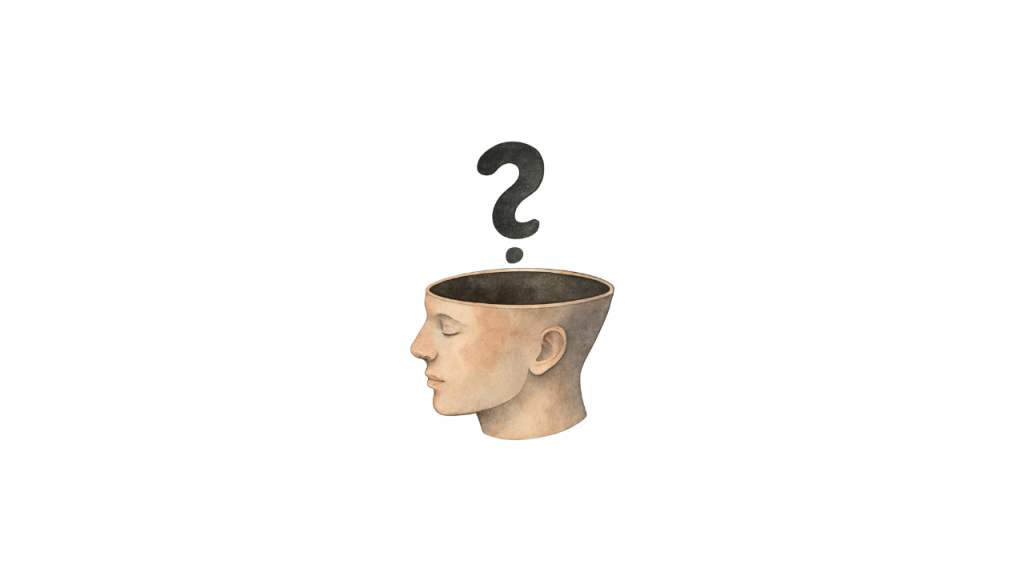
Saying “I don’t know” interrupts this cycle. The phrase creates room for thought in a space that rarely grants any. It turns down the temperature. It allows a moment of air in a system that has been running on fumes.
Political polarization depends on the belief that every issue contains only two possible answers. Admitting uncertainty challenges the idea that humans must pledge allegiance to entire ideological packages. When someone says they need more time to understand, they signal that a conversation is possible rather than another performance of side-versus-side. Tension softens. The dynamic shifts away from defending a team and toward examining the idea itself.
This matters because the volume of information expected of individuals is impossible to carry. Entire regions, wars, border histories, and legislative battles arrive through notifications while students are walking to class, employees are on break, or parents are trying to make dinner. Even experts dedicate careers to single topics and still run into areas they are continuing to explore. The idea that average people must produce faultless commentary on everything discourages engagement rather than strengthening it.
A culture that cannot tolerate uncertainty becomes vulnerable to loud voices that promise simple explanations. Confidence begins to outweigh substance. Complexity is replaced with slogans. People cling to whoever sounds sure, even when that certainty rests on shaky ground. In this environment, humility becomes a form of intellectual self-defense.
Admitting “I don’t know” also transforms interpersonal relationships around politics. When one person is willing to slow down, others often follow. The discussion becomes less adversarial. People stop speaking like lawyers preparing closing arguments and begin sounding like citizens attempting to understand their own world. The tone shifts away from accusation and toward curiosity.
Curiosity is a skill that deserves more honor than it receives. It widens the conversation. It invites follow-up questions that are actually useful:
What sources explain this well?
What context am I missing?
Which historians or analysts have studied this closely?
How did this situation develop over time?
A person who asks questions is still in motion. They have not withdrawn from civic engagement; they have deepened it. A political landscape that respects this process becomes capable of growth rather than calcification. It encourages people to refine their understanding rather than defend their first impression forever.
There is also emotional relief in honesty. Pretending to understand everything is exhausting. Many people feel this strain silently while scrolling through constant developments: the sinking feeling of being expected to keep up with a world that expands faster than their capacity to learn. Acknowledging that learning takes time offers permission to breathe. It also creates space for others to admit the same.
Consider how different public life might look if thoughtful hesitation were allowed. People could change their minds without shame. Opinions could evolve. Discussions could become shared investigations instead of duels. Pride would not stand in the way of new information. Democratic participation could operate the way education is supposed to work: through reading, questioning, listening, and gradual understanding.
“I don’t know” becomes a promise to remain engaged. It signals commitment rather than surrender. It means the person intends to research, to learn, to read something beyond a headline. It treats political understanding as a long, ongoing project rather than a competition to shout the fastest answer.
At a time when polarization asks everyone to choose a side before they choose a source, humility becomes a radical civic gesture. It leaves space for dialogue in a culture running low on it. It reminds people that citizenship is not measured in instantaneous expertise but in steady participation over time.
In a world increasingly shaped by confident voices, the simple act of slowing down and admitting imperfection may be one of the rarest—and most transformative—political actions available.
 Kithéa